The Tyler Animal Interactional Risk Framework™
What Is the Tyler Animal Interaction Risk Framework™
The Tyler Animal Interaction Risk Framework™ is a structured methodology for identifying and reducing risks wherever people and animals interact. By evaluating environmental conditions, handler control, animal behavior, operational procedures, and liability exposure, the framework helps prevent incidents before they become injuries, insurance claims, or legal liability.
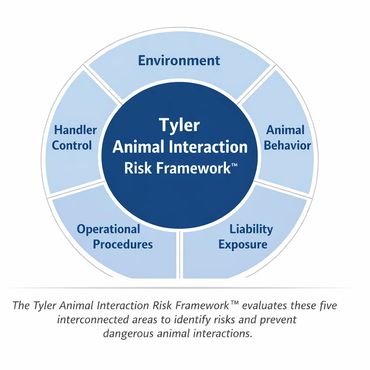
The Five Pillars of the Tyler Animal Interaction Risk Framework™
1. Environment
Environmental conditions can significantly influence animal behavior and human safety. Layout, noise, crowding, and stress factors must be evaluated to reduce risk.
2. Handler Control
Proper handling techniques and situational awareness are essential for maintaining control and preventing dangerous situations.
3. Animal Behavior
Understanding behavioral signals allows handlers and organizations to recognize stress, escalation patterns, and warning signs before incidents occur.
4. Operational Procedures
Clear policies and procedures help ensure consistent and safe animal interaction practices within organizations and facilities.
5. Liability Exposure
Evaluating potential liability risks helps organizations reduce incidents that could lead to injuries, insurance claims, or legal consequences. The Tyler Animal Interaction Risk Framework™ evaluates five critical areas that influence safety where people and animals interact. These pillars help identify risk factors before incidents occur.
Where the Framework Is Applied
The Tyler Animal Interaction Risk Framework™ is designed for environments where people and animals regularly interact. By evaluating behavioral factors, containment systems, and operational procedures, the framework helps organizations identify risk and prevent incidents before they occur.
The framework can be applied in environments where people and animals regularly interact, including:
Residential Environments
• Homes
• Apartments
• HOAs and residential communities
Residential environments often involve daily interaction between animals, residents, visitors, and service providers. These settings frequently experience incidents related to containment failures, handler error, and uncontrolled interactions.
Animal Facilities
• Veterinary hospitals and clinics
• Dog daycare facilities
• Boarding facilities
These environments involve frequent handling of unfamiliar animals, making structured safety protocols and containment practices essential.
Public Interaction Spaces
• Parks
• Retail locations
Public spaces create uncontrolled interaction between animals, owners, and members of the public, increasing the potential for unpredictable encounters.
Hospitality Environments
• Hotels
• Resorts
• Extended-stay properties
Hospitality environments bring unfamiliar animals and unfamiliar people into shared spaces such as hallways, elevators, and lobbies. Without clear containment expectations and operational procedures, these environments are elevated interaction risk.
By applying this structured approach, organizations can reduce safety risks, improve animal handling practices, and limit potential liability exposure.
How the Tyler Animal Interaction Risk Framework™ Is Implemented
The Tyler Animal Interaction Risk Framework™ is applied through professional assessments, consulting services, and safety evaluations designed to identify risks before incidents occur.
By evaluating environments where people and animals interact, the framework helps organizations and individuals improve safety practices and reduce liability exposure.
Implementation may include:
- On-site safety assessments
- Animal interaction risk evaluations
- Handler safety and control analysis
- Environmental hazard identification
- Operational procedure recommendations
Organizations seeking a structured approach to animal interaction safety can apply the Tyler Animal Interaction Risk Framework™ to improve safety standards and prevent incidents.
Work With Christian Tyler
Organizations and communities that manage environments where people and animals interact face real safety and liability challenges. The Tyler Animal Interaction Risk Framework™ provides a structured approach to identifying and reducing those risks.
Through professional consulting and safety assessments, Christian Tyler helps organizations evaluate animal interaction environments, identify risk factors, and implement practical safety improvements.
Services may include:
• Animal interaction risk assessments
• Facility and environmental safety evaluations
• Handler safety and control analysis
• Incident risk reduction strategies
• Consulting for organizations and communities
Request a Consultation
If your organization manages environments where people and animals interact, proactive safety assessment can help prevent incidents and reduce liability exposure.